
| Water Care Technologies
Safety First: Why Prefabricated STP Plants Are the Smart Choice for Small Residential Layouts A Blog by Water Care Technologies | watercareindia.net |
When a housing society or residential layout installs a Sewage Treatment Plant (STP), one question that rarely gets discussed—but should—is: How safe is the plant for residents, children, and maintenance staff who live and work around it every day?
For small residential layouts of 50 to 500 apartments, space is tight, budgets are modest, and technical supervision is limited. Traditional open-tank STPs come with real risks: exposed machinery, chemical odors, slip hazards, and the constant anxiety of children or untrained personnel wandering near operational equipment.
At Water Care Technologies (WCT), we have engineered a smarter answer—a fully prefabricated, containerized STP where all equipment is enclosed and locked. Here is why this matters.
The Hidden Safety Risks in a Conventional STP
Most residential developers focus on treatment capacity and cost. But a standard civil STP built on-site carries risks that are easy to overlook during project planning:
- Open aeration tanks and clarifier tanks—fall hazards, especially for children
- Exposed blowers, pumps, and motor drives — entanglement and electric shock risks
- Chemical dosing units left accessible — direct contact hazard
- Unguarded belt drives and rotating equipment—injury during routine maintenance
- Wet, slippery surfaces around plant area—slip and fall incidents
- Odour and aerosol exposure—health risk for staff and nearby residents
These are not hypothetical. Workplace accidents at utility installations in residential complexes do occur, and most go unreported. The responsibility falls on the housing society—and the developer who designed the plant.
What Makes a Prefabricated STP Inherently Safer?
A prefabricated or packaged STP from WCT is built inside a factory-fabricated enclosure — typically a steel or FRP container — before it arrives on site. All process equipment is installed, tested, and locked inside before delivery.
| 🔒 Key Safety Features of WCT’s Prefabricated STP
✅ All equipment enclosed—no open rotating parts accessible to residents ✅ Lockable panel doors — only authorised maintenance personnel can enter ✅ No open liquid surfaces exposed to the surrounding area ✅ Minimal civil construction—no large excavated tanks, no deep pits ✅ Fully wired and interlocked—electrical safety built in at the factory ✅ Compact footprint — reduces the zone of risk within the layout ✅ Odor-controlled enclosure—deodorizers or bio-filters integrated |
The result: a plant that looks like a utility cabinet, not an industrial hazard.
Safety During Installation — Faster, Cleaner, Less Disruptive
Civil STPs require weeks of on-site construction—excavation, formwork, concreting, and curing. This means:
- Prolonged construction risk in a live residential environment
- Deep open pits during excavation—fall hazard for workers and residents
- Heavy machinery operating close to occupied towers
- Dust, noise, and construction debris for extended periods
A prefabricated WCT plant arrives ready-to-install. Site work is limited to a simple plinth or base slab, inlet/outlet piping connections, and electrical hook-up. Installation is typically completed in 3 to 7 days.
Shorter site exposure means fewer incidents. It also means less liability for the developer and less inconvenience for early residents.
Safety During Operation—For Maintenance Staff and Residents
Day-to-day STP operation in a residential layout is usually managed by a society-appointed operator or a housekeeping supervisor with limited technical training. Safety in operation depends on design, not just training.
| Risk Scenario | WCT Prefabricated STP Response |
| Child enters plant area | Lockable enclosure — access restricted to authorised persons |
| Operator touches live pump | All equipment pre-wired with earthing and MCB protection; no exposed terminals |
| Chemical spill during dosing | Chemical tanks enclosed inside unit; spills are contained within plant boundary |
| Flooding of plant area in monsoon | Elevated plinth design; sealed enclosure prevents water ingress |
| Odour complaint from residents | Enclosed design + optional bio-filter deodorizer fitted at factory |
| Blower noise disturbance | Acoustic enclosure available; blowers installed away from residential zones |
Regulatory and Liability Perspective
Housing societies and developers in India carry legal responsibility under the Environment Protection Act, 1986 and state SPCB (State Pollution Control Board) norms for the safe operation of an STP on their premises. RERA regulations in many states now mandate operational STPs before occupancy certificates are granted.
From a liability standpoint, an enclosed, tamper-proof prefabricated plant provides a much stronger compliance record than an open civil plant with exposed equipment. In the event of any safety audit or inspection, a locked, labelled, and maintained prefabricated STP signals responsible management.
WCT’s Approach: Safety Engineered at the Factory, Not Managed on Site
At Water Care Technologies, we believe safety should not be an afterthought or a checklist. At our fabrication facility, we design and build safety into our prefabricated STP systems before they reach your residential layout.
| 🏗 How WCT Builds Safety In
• Factory-tested electrical panel with MCB, RCCB, and interlocks • All rotating equipment guarded and enclosed before dispatch • PLC-based automation for unattended, safe operation • Clear labelling, operating instructions, and emergency stop switches • Spill containment for chemical dosing systems • Remote monitoring option for society management (SCADA-ready) |
Our systems are designed for layouts ranging from 50 KLD to 500 KLD capacity, and we provide full commissioning, operator training, and AMC support to ensure safe operation through the plant lifecycle.
The Bottom Line for Developers and Housing Societies
Choosing a prefabricated, enclosed STP is not just a technical decision—it is a safety and governance decision. It protects your residents, limits your liability, and signals responsible development.
Enclosing, locking, and factory-testing every piece of machinery transforms the plant into a utility rather than a hazard. 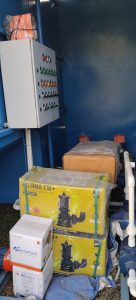
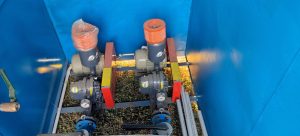
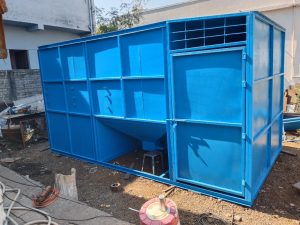 That is exactly how it should be in a residential environment.
| Planning an STP for your residential layout?
Talk to Water Care Technologies for a safe, compliant, prefabricated solution. www.watercareindia.net call 9881507999 |
— Pravin Chardei, Founder, Water Care Technologies | Chemical Engineer | Water & Wastewater Expert